The medical device industry turns to AI.

Imaging machines now use deep learning to speed up scans and flag potential lesions for radiologists. AI is also used in wearable devices to detect heart arrhythmias and in software systems to predict the risk of sepsis in hospitalized patients.
As the proliferation of AI in the medtech industry continues, questions remain about the efficacy of these technologies, how they should be regulated and how to mitigate the risk of bias when used in patient care.
SAN DIEGO — Medtech executives are incorporating artificial intelligence into medical devices, but they are also wading into using the technology for administrative tasks.
At AdvaMed’s The MedTech Conference, company leaders said they expect to incorporate AI into more of their devices. With the recent rise of generative AI, companies are also considering the technology for internal tools, but progress has been slower.
Here’s how four medtech executives are using AI today:
Stryker CEO Kevin Lobo
Lobo said every one of Stryker’s businesses has a digital or AI component. He also expects that Stryker will have a digital division in the future, following the company’s acquisitions of Vocera Communications and Care.ai.
“Five years ago, I would have never thought I’d be buying an AI company,” Lobo said.
With Vocera, Stryker has a technology that provides badge alerts to healthcare workers based on what’s happening in a patient’s room. For example, if a patient is lowering a guardrail to leave their bed, it can send an alert to prevent falls.
Stryker is also developing AI technologies in surgery. The company has a system, called Blueprint, that advises surgeons on the type of implant they should use in an operation and provides a surgery plan.
Projects that use innovation to solve a problem for Stryker’s customers are easy to prioritize, Lobo said, adding that teams “have no trouble finding the money” for these projects.
Figuring out how to use AI for internal productivity is more difficult.
“Frankly, we’re a little bit behind where I’d like to be,” he said, noting that the company is focusing on areas such as customer service and regulatory work.
Insulet CEO Ashley McEvoy
McEvoy, who became CEO of Insulet in April 2025, said the diabetes technology company has used OpenAI’s foundation models for customer care and retention. Insulet uses the technology to provide customer care agents access to company knowledge, which can help with call wait times.
Looking to the future, McEvoy hopes to use Insulet’s data in a precision medicine play to build more personalized algorithms for the company’s insulin pump users.
From a culture perspective, McEvoy said she is working with company leaders to “embrace the good parts of [AI] and not be naive to some of the darker sides,” but still have the freedom to experiment.
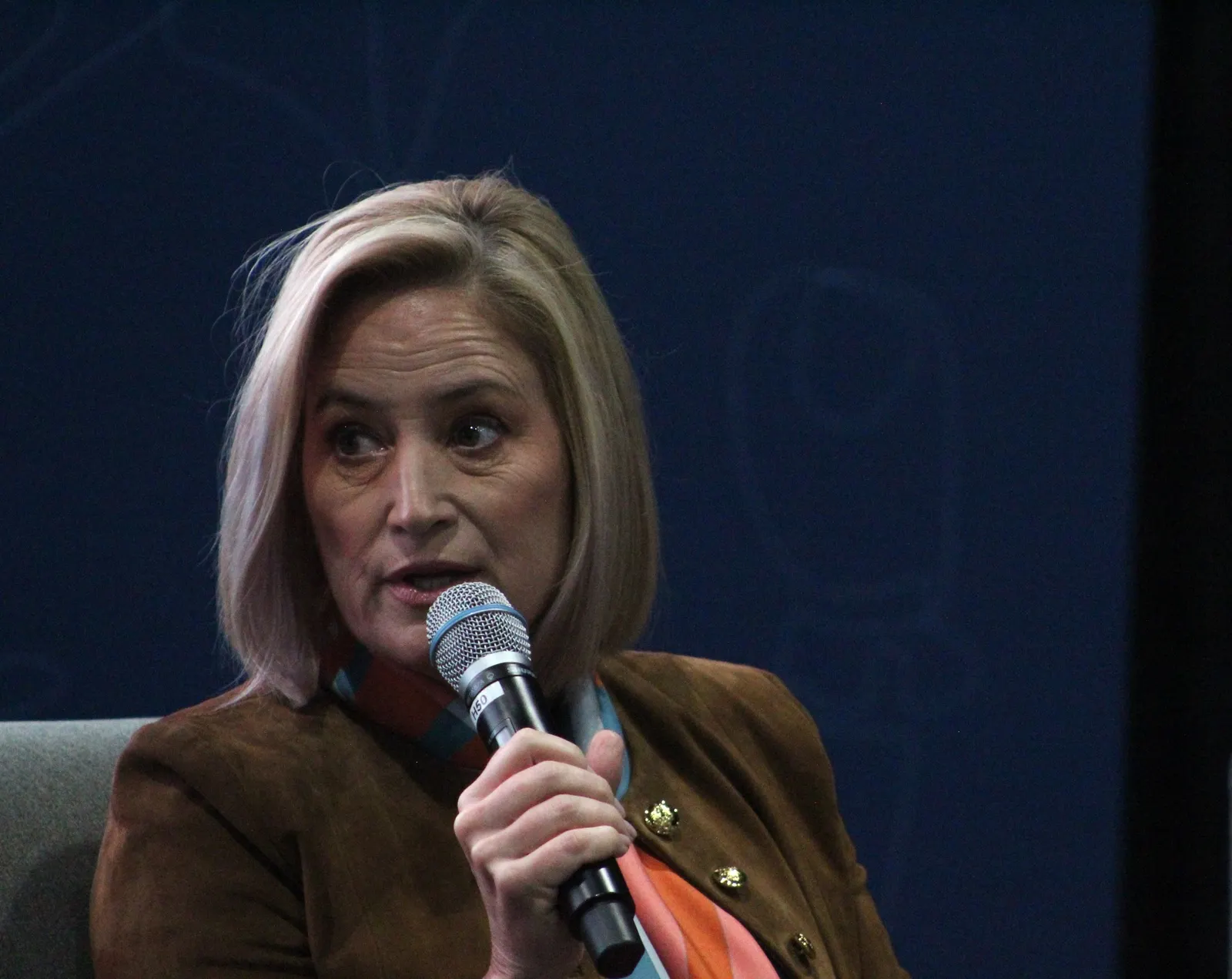
Hologic CEO Stephen MacMillan
MacMillan said AI has been helpful with the rise of 3D mammography, which creates more images than 2D mammograms. Looking through so many images can be fatiguing for radiologists. The company uses machine learning to distill the process down to “go look at slide 3 in the upper left quadrant instead of looking at hundreds of slides,” MacMillan said.
The company has started using AI in its breast imaging segment, but plans to roll it out to the rest of its businesses. For example, Hologic has developed a newer tool to support pap smears, which are still often done by cytologists looking at individual slides through microscopes. The company has digitized the process and uses machine learning to flag objects of interest for cervical cancer. Hologic received the FDA’s de novo authorization for the digital cytology system in 2024.
Olympus Chief Strategy Officer Gabriela Kaynor
Four years ago, Olympus started focusing on investing in its data and AI capabilities, but more geared toward the company’s medtech products, Kaynor said. That has culminated in a recent product launch for AI to support colorectal polyp detection, as part of a broader platform to use AI in endoscopy.
In the past two years, Kaynor said, Olympus has explored AI more for enterprise productivity. For example, Olympus built an internal AI tool to help with language translation, which can be a friction point.
Olympus is headquartered in Tokyo, and work is done in Japanese, English and German. Being able to translate data — which might be sensitive — without it leaving the company was a good use case for the technology, Kaynor said. Olympus has been piloting the tool, and the company is getting ready to launch it internally.
“This has been something that I think has reached, really, every corner of our company,” Kaynor said.
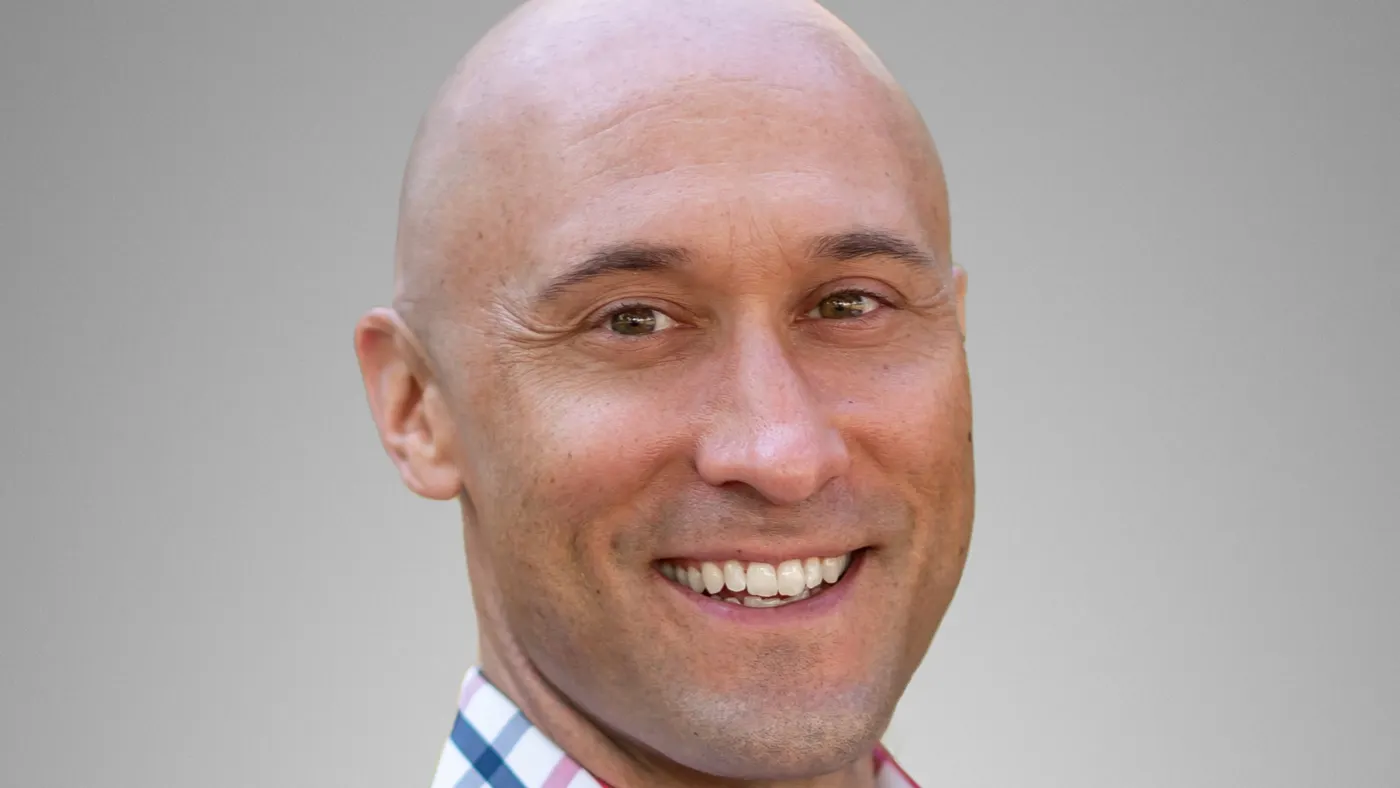
Nvidia’s David Niewolny on the future of AI in medical devices
As more medical device companies incorporate artificial intelligence, chip designer Nvidia is playing a central role. The company has struck partnerships with top medtech firms, including Medtronic, Johnson & Johnson, GE HealthCare, and Philips.
The uses span a breadth of technologies. In imaging, Nvidia has partnered with GE HealthCare around autonomous X-ray and ultrasound solutions, and is working with Philips to develop foundation models, a type of model that can be used for a wide variety of tasks, for MRI machines. In robotics, J&J’s Monarch platform for bronchoscopy uses Nvidia’s computing platform. NVIDIA also debuted a new developer framework for healthcare robotics in March 2025, called Isaac for Healthcare. The system features three computers to generate synthetic data to simulate workflows, create virtual environments where robots can safely learn skills, and a platform to deploy applications and for real-time sensor processing.
MedTech Dive spoke with David Niewolny, director of business development for healthcare and medical at Nvidia, about the company’s partnerships and the future of AI in medical devices.
This interview has been edited for length and clarity.
MEDTECH DIVE: What’s the current state of AI in medtech?
DAVID NIEWOLNY: In the last 18 months, we’ve seen this really fast progression in terms of healthcare and medtech adopting generative AI. That’s starting the idea of creating — drafting clinical notes, generating synthetic data for training. Devices are now looking at how they can begin bringing agentic AI into these applications. You’re seeing digital agents being an assistant to the healthcare provider or the patient with automating workflows, driving more context-aware support for clinicians.
Then you get to where we see the future. Where a lot of the AI and innovation is happening is in the idea of physical AI. And that brings us into this role of robotics. The easy one to think of is surgical AI. But there are a huge number of applications. One specific use case that I talked about in Taiwan [at GTC Taipei] is with some of these more operational robotics. Think of a nurse assistant in terms of delivering medication, bringing different supplies around a hospital, and making sure different areas of the hospital are stocked.
You recently announced a partnership with GE HealthCare around autonomous imaging. How does that work?
That was around, completely transforming the way that you would look at doing medical imaging in the future. We took two initial use cases, one being the idea of an autonomous X-ray. Think of a future world where you no longer have the X-ray tech. You now have a digital agent that’s essentially checking you in. You walk into a room where there’s another robot, it could be a digital agent, that’s providing you with all of the guidance for where to stand, when to hold your breath and how to position yourself. You stand in one spot, and then the actual machine positions itself.
You can also look at some of the generative AI applications, where it can hand a doctor a full report on everything that it saw in terms of its clinical findings.
In that particular case, now you’re expanding the access to care because you essentially have these fully autonomous systems that are doing medical imaging.
X-ray is one that we announced, and the other one is around ultrasound. In each one of these cases, GE HealthCare is working with us and collaborating on a methodology and tools to build these robotic systems.
What opportunities does Nvidia see in AI in medical devices?
Everything is about building an ecosystem. You look at all of the great work that we can do from accelerating a lot of these applications with AI and now robotics, going from Nvidia direct to a healthcare provider, there’s just too big of a gap. They don’t have the developers in-house to begin building this.
So, then you work backwards in that ecosystem, and you realize it’s the medtech companies that are building out all of these devices and solutions. What we’re looking at doing is, how do we bring all of those components of the ecosystem together, building on a common platform? Computers were not mainstream until Windows opened the door for this huge influx of software.
A lot of this learning we took from another industry: automotive. We essentially needed to create a fully simulated environment, train on that simulated data, take those algorithms and move them down to the edge.
We took those learnings and said, “What other areas are ripe for disruption?” Medtech, specifically, has the most to benefit from this opportunity of having a common platform. But at the same time, it had a big hurdle to jump over. There wasn’t any single company in that ecosystem, as we saw it, that could essentially build out that platform.
I’m hearing more people talk about Agentic AI, a type of AI that can perform autonomous tasks. Why are medtech companies interested in this technology?
Agentic AI has a whole number of applications. A partner of ours, Abridge, leveraged a lot of our technology to do clinical documentation. They’re integrating with major EHRs, and they’re continuing to get more and more hospital users.
You also have some of these agents actually working right alongside a surgeon, where now you have an assistant in the room, where you can begin asking questions, pulling up the patient’s medical records, adjusting some of the devices in the room.
One of our partners, Moon Surgical, actually downloaded their entire instructions for use manual into an agent that a doctor or surgeon can reference for things like setup. Instead of referencing a 1,000-page manual, you can just ask the robot where to be set up, how to be set up, and what the best practices are.
Have you faced concerns from clinicians about AI taking their jobs?
Yes, people do get concerned. The key piece is, in almost every one of these cases, we’re augmenting the team members that are already there. There’s a shortage in place. This is actually improving care, rather than the narrative about taking people’s jobs. We take a lot of those workloads that the staff sees as either busy work or mundane and augment them.
There’s always going to be a surgeon involved here, but we can do sub-task automation and actually make some of those tasks easier for a surgeon.
Like all product developers, the terms AI, LLM, and Artificial Intelligence attract the attention of SEO and readers. Many marketers include one of those terms in their products, be it television, cable, or streaming. It does not matter if AI is really used, and in most pronouncements, it has no presence in their product; BAIT AND SWITCH OR CALL IT CLICKBAIT.
I

Health System Leadership Training at RIYAADA ACADEMY is designed to develop confident professionals who can lead healthcare organizations effectively. The training focuses on strategic leadership, healthcare administration, decision-making, team management, and improving health system performance. Participants gain practical knowledge to manage challenges, strengthen organizational efficiency, and support better healthcare outcomes. RIYAADA ACADEMY combines leadership principles with real-world healthcare practices, helping professionals build the skills needed to lead teams and drive sustainable improvements. This comprehensive Health System Leadership Training supports aspiring and current healthcare leaders in achieving professional growth and organizational excellence.
ReplyDelete